

Antioxidants are anything that slow or prevent oxidation. Last week, I wrote about the labyrinth of the compounds we can get from our diet that fit this definition and help us knock down the inflammation caused by radicals.
Chocolate marketers love touting the antioxidant healthy indulgence of dark chocolate. But it wasn’t always that way. In 1996, the academic journal, The Lancet, published a study reporting antioxidants are in chocolate and, boy, did local news have a field day. CNN particularly seemed to run it every year, and despite them bringing on nutritionists and dieticians saying, “don’t just run out and grab a chocolate bar and think it’s a health food,” the cat was officially out of the bag.
I want to explore the antioxidants in cacao, cocoa, chocolate, and all things Theobroma. There do appear to be health benefits from this species, but understanding how that works is another beast. It all starts with flavanols, so best to understand what these compounds are.
Flavanols

Flava-flaaaaavanols are a sub-category of polyphenols and the main antioxidant compound marketed around chocolate. The two main flavanols in raw, unroasted cocoa are epicatechin and catechin. These two are readily absorbable into your bloodstream during digestion and increase production of the blood-soluble gas, nitric oxide. Nitric oxide is the main agent here in helping blood pressure and reducing oxidative stress to your circulatory system. This gas is the same end result of taking pre-workouts with L-citrulline or L-arginine in them, which widen and relax your blood vessels. I would argue that getting this from cocoa is a far more enjoyable experience.
There are also chains of multiple epicatechins attached to one another called procyanidins. These make up to 65% of the polyphenols in raw cocoa, with the epicatechin and catechin making up about 30%. The difference between the chains and the single polyphenols is that the chains are not as absorbable as the catechins. Instead, procyanidins are broken down by bacteria to create a highly potent antioxidant called DHPV, along with other helpful metabolites. DHPV circulates in the blood for much longer than epicatechin and helps prevent clogged arteries, protect bone-forming cells, and suppress early-stage fat cells.
Raw cocoa is a truly fascinating metabolic stew of antioxidants, but most people don’t eat raw cocoa.
Cocoa Processing Affects Antioxidants
The cocoa powder in your baking cabinet is probably Dutch cocoa powder. “Dutching” or alkalinizing submits cocoa to higher pH to reduce the bitterness of cocoa powder, but in the meantime can drop the polyphenol content by up to 90%. Rendering it essentially just a flavor.
The percentages on dark chocolate are also unclear, because a 100% dark chocolate bar just means there’s no sugar or milk powder added, and that entire product is sourced from cocoa. The polyphenols only live in the cocoa solids, not the cocoa butter, so not every 100% dark chocolate bar will have the same solids to butter ratio. So basically, it’s a crap shoot to understand if anything sold at your grocery store actually has the polyphenols you’re looking for.
Chocolate goes through many physical processes, like roasting, milling, conching and the like to become a chocolate bar. And each step starts to shave down the polyphenols in cocoa.
A raw, unfermented raw cacao bean is intensely bitter, much of which comes from the high load of polyphenols we’ve been talking about. The measure of how much these polyphenols can prevent oxidation in your body is called the antioxidant capacity and is measured in gallic acid equivalents (GAE). Raw cacao has a maximum of 600 mg GAE/g (matcha is about 250 mg GAE/g), and unless you’re buying a $77 pod from Miami or live on a cacao farm, you’re not ever gonna get that.
Cacao beans are fermented and dried, which absolutely nukes this antioxidant load down to less than 25% of its raw state. It’s then roasted, where the polyphenols start to create the iconic flavor notes of chocolate, but this drops them down to about 100 mg GAE/g. The frictional heat from grinding the beans then halves the load again so that we’re now looking at 50 mg GAE/g of finished cocoa solids.
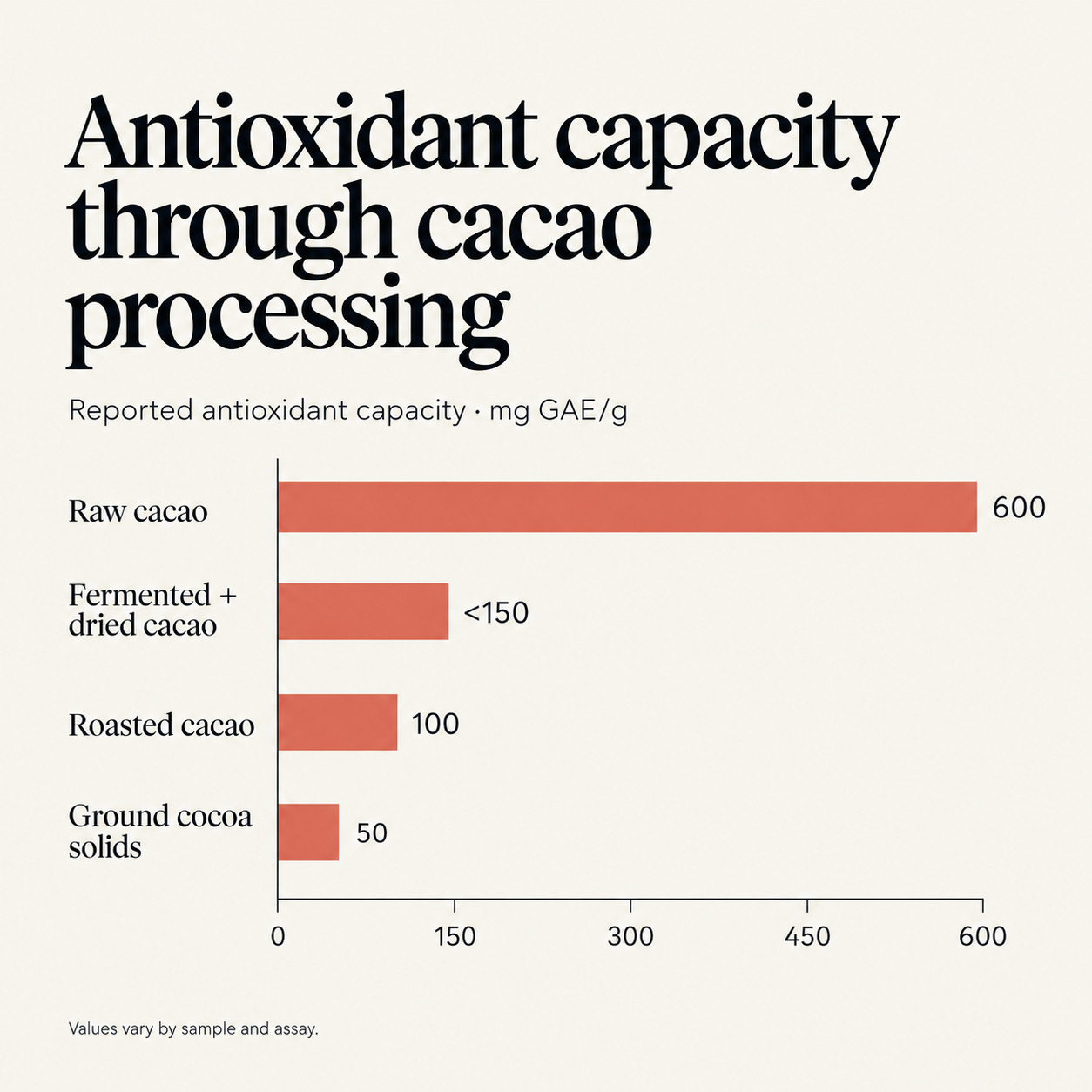
The paradox is that every one of these processing steps develops the flavor of cacao; changing it from an agricultural product into chocolate. Destroying a heavy portion of the purported health benefits along the way. It’s important to know what you’re actually versus what the news cherry picks from journal articles. If you want to enjoy chocolate – enjoy it and have whatever form of it you want! If you’re going flat-out longevity mode, then screw flavor and get those freaky flavanols. I am not even sure what the best product is that you could buy, though I have heard great things about FlavaMix. I’ve never used it and I’m not sponsored1, but it seems legit.
If you’re looking to get heart benefits from cocoa, the surefire way is to make sure that it is not alkalized or Dutched. You should also see if they put the percentage of flavanols that are available, and if you can get a Certificate of Analysis (COA) that would be high marks.
What medical literature shows
Finally, one product that caught my eye was CocoaVia, a product made by Mars’ Food and Nutrition business unit. In 2017, the company funded the COcoa Supplement and Multivitamin Outcomes Study or COSMOS study, where for three and half years, folks were given a dose of 500mg of cocoa flavanols. They were also looking at whether multivitamins (specifically Centrum Silver) worked in tandem with these flavanols, so over 20,000 participants fell into one of four groups:
Active cocoa flavanols + Active Multivitamin
Placebo cocoa flavanols + Active Multivitamin
Active cocoa flavanols + Placebo Multivitamin
Placebo cocoa flavanols + Placebo Multivitamin
The long and short of it is that while the researchers noted a 27% drop in deaths related to cardiovascular disease, they didn’t see a drop in cardiovascular events: heart attack or strokes, essentially. They did deduce the folks that religiously adhered to the protocol and took their pills every single day, and there were 15% less heat attacks and strokes with this group. But I don’t know if I have that type of commitment in me. The researchers (*cough* who were funded by a cocoa company *cough*) had a rosier view of the outcomes saying there are “promising signals” from using CocoaVia! Isn’t it obvious?!
Despite my snarkiness, I do think there is likely a benefit, but am not going out and buying anything specialized. I like to seek out bitter tastes in their own right, and thankfully high concentrations of polyphenols are pretty much always bitter. Basically, this series on antioxidants is a chance to talk about all of my favorite foods and for me to learn if they have any health knock-on effects. Until next time!
lol, can you imagine me being sponsored haha